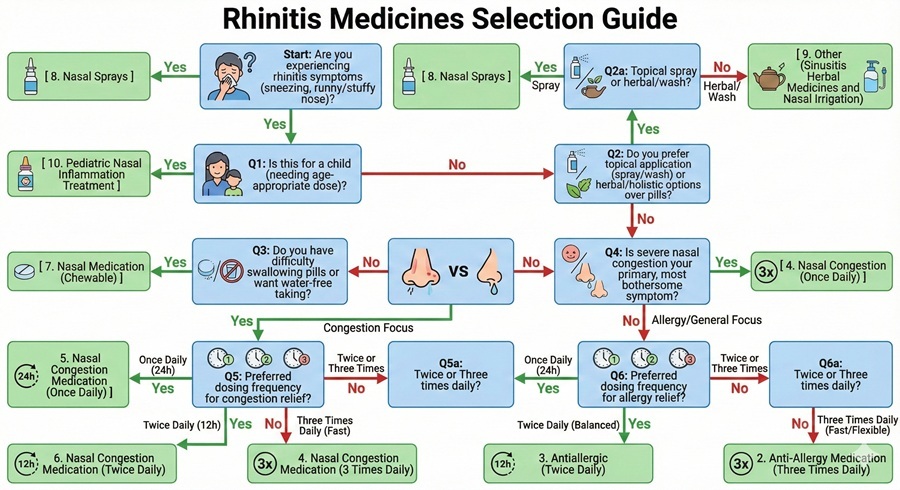
Rhinitis Medicines Selection Guide

Comprehensive solutions for nasal allergies, congestion, and sinus health

Understanding Rhinitis Medicines

Rhinitis medicines encompass a wide range of treatments for nasal inflammation, whether caused by allergies, infections, or other factors. These medications work through different mechanisms to relieve symptoms such as sneezing, runny nose, nasal congestion, itching, and sinus pressure.

Choosing the right rhinitis medicine depends on several factors: the primary symptom (allergy vs. congestion), desired dosing frequency, age of the user, preference for systemic vs. topical treatment, and whether you prefer conventional or traditional herbal approaches.

Key Decision Factors

1. Primary Symptom Type

  • Allergy-dominant: Sneezing, itching, watery eyes, runny nose → Choose Anti-Allergy Medications
  • Congestion-dominant: Blocked nose, difficulty breathing, sinus pressure → Choose Nasal Congestion Medications
  • Mixed symptoms: Both allergic and congestive → Choose combination formulations

2. Preferred Dosing Frequency

  • Once daily: Maximum convenience, consistent coverage
  • Twice daily: Balance of convenience and control
  • Three times daily: Flexible dosing, faster action

3. Administration Preference

  • Oral tablets/capsules: Systemic effect, whole-body coverage
  • Chewable tablets: Easy to take, no water needed
  • Nasal sprays: Direct local action, minimal systemic effects
  • Herbal/irrigation: Natural approaches, complementary therapy

Product Selection Flowchart

START: What is your primary concern?
Q1: What is your main symptom?
Allergies
(Sneezing, itching, runny nose)
→ Go to Q2
Congestion
(Blocked nose, stuffiness)
→ Go to Q3
Chronic Sinusitis
(Sinus pressure, post-nasal drip)
Q2: What dosing frequency do you prefer for ALLERGY medication?
Once Daily
Maximum convenience, 24-hour coverage
Twice Daily
Balanced control, 12-hour intervals
Three Times Daily
Fast action, flexible dosing
Q3: What dosing frequency do you prefer for CONGESTION medication?
Once Daily
24-hour extended relief
Twice Daily
12-hour balanced coverage
Three Times Daily
Strong, frequent relief
Special Considerations
Difficulty Swallowing?
Prefer Topical Treatment?
For Children?

Category Comparison at a Glance

Category Primary Use Dosing Key Benefit Drowsiness Risk
Anti-Allergy (Once Daily) Allergic rhinitis Once daily 24-hour coverage, convenience Low
Antiallergic (Twice Daily) Allergic rhinitis Twice daily Balanced control Low-Moderate
Anti-Allergy (Three Times) Acute allergies Three times daily Fast action, flexible Moderate
Congestion (Once Daily) Nasal congestion Once daily Extended decongestant relief None (may cause alertness)
Congestion (Twice Daily) Nasal congestion Twice daily 12-hour decongestant effect None (may cause alertness)
Congestion (3 Times) Severe congestion Three times daily Strong, frequent relief None (may cause alertness)
Chewable Various rhinitis Varies by product Easy to take, no water Varies
Nasal Sprays Localized symptoms 1-3 times daily Direct relief, minimal systemic None
Herbal/Irrigation Chronic sinusitis Varies Natural, holistic approach None
Pediatric Children's rhinitis Age-appropriate Safe for children Low

Usage Guidelines by Category

Anti-Allergy Medications (All Frequencies)

  • When to Take: Once-daily at same time each day (morning); Twice-daily morning and evening; Three times-daily spread evenly throughout day
  • Best Practices: Start before allergy season for preventive effect; Take consistently for best results; Can be used year-round for perennial allergies
  • With Food: Can be taken with or without food; Taking with food may reduce stomach upset
  • Duration: Safe for long-term use as needed; Continue through allergy season
  • Tips: Once-daily formulations maintain more consistent blood levels; Three times-daily offers flexibility for variable symptoms

Nasal Congestion Medications (All Frequencies)

  • Duration Limit: Do not use oral decongestants for more than 5-7 consecutive days without medical supervision
  • Timing: Avoid taking close to bedtime as decongestants may interfere with sleep
  • With Food: Take with food or milk if stomach upset occurs
  • Monitoring: Check blood pressure if you have hypertension; Monitor for nervousness or rapid heartbeat
  • Important: If congestion persists beyond 7 days, consult healthcare provider

Chewable Medications

  • How to Take: Chew tablets thoroughly before swallowing; No water required but can be taken with water if desired
  • Portability: Individually wrapped for on-the-go convenience
  • Children: Ensure child can chew safely; Follow age-specific dosing carefully
  • Storage: Keep in original packaging to protect from moisture

Nasal Sprays

  • Proper Technique: Clear nose gently before use; Aim spray toward outer nostril wall, away from septum; Breathe in gently while spraying; Avoid blowing nose immediately after
  • Decongestant Sprays: LIMIT TO 3-5 DAYS MAXIMUM to prevent rebound congestion; For short-term acute use only
  • Steroid Sprays: Safe for long-term use; May take several days to reach full effect; Use consistently as directed
  • Maintenance: Clean spray nozzle regularly; Prime pump before first use

Herbal Medicines and Nasal Irrigation

  • Kampo Medicines: Take as directed, often with warm water; May take several weeks for full effect; Safe for long-term use
  • Nasal Irrigation: Use only sterile, distilled, or boiled (then cooled) water; Follow device instructions carefully; Perform over sink; Breathe through mouth during irrigation
  • Frequency: Can be done 1-2 times daily or as needed; Particularly helpful before bedtime
  • Benefits: Removes mucus, allergens, and irritants; Moisturizes nasal passages; Drug-free approach

Pediatric Formulations

  • Age Verification: Always confirm child meets minimum age requirement for product
  • Weight-Based Dosing: Use weight-based dosing when provided in instructions
  • Administration: Chewable tablets for children who cannot swallow pills; Pleasant flavors improve compliance
  • Monitoring: Watch for side effects carefully; Keep medication out of children's reach
  • School Use: Choose less sedating formulations for daytime use during school

Important Safety Warnings

Decongestant Precautions

DO NOT use nasal decongestants (oral or spray) if you have:

  • Uncontrolled high blood pressure or severe hypertension
  • Severe heart disease or coronary artery disease
  • Hyperthyroidism
  • Taking MAO inhibitors or within 2 weeks of stopping them

Oral Decongestants: Limited Duration Use

  • Maximum 5-7 consecutive days without medical supervision
  • Prolonged use can cause rebound congestion (rhinitis medicamentosa)
  • May cause nervousness, dizziness, or sleep disturbance

Nasal Decongestant Sprays: CRITICAL 3-5 Day Limit

  • NEVER exceed 3-5 days of continuous use
  • Rebound congestion occurs with overuse and can be severe
  • Only for acute, short-term symptom relief

Antihistamine Precautions

  • May cause drowsiness, especially first-generation antihistamines
  • Avoid driving or operating machinery if drowsy
  • Do not combine with alcohol
  • Use caution in elderly patients (increased fall risk from sedation)
  • May cause urinary retention in men with prostate enlargement
  • Contraindicated in narrow-angle glaucoma

Pediatric Safety

  • Always verify minimum age requirements before giving to children
  • Never exceed recommended pediatric doses
  • Supervise children taking medication
  • Store all medications out of reach of children
  • Consult pediatrician before giving multiple medications

Pregnancy and Nursing

  • Consult healthcare provider before using any rhinitis medication during pregnancy
  • Avoid decongestants in first trimester
  • Some antihistamines are safer than others during pregnancy
  • Medications can pass into breast milk

When to Seek Medical Attention

Consult a healthcare provider if:

Symptoms Persist or Worsen:
  • Symptoms last more than 10 days without improvement
  • Symptoms worsen after initial improvement
  • Over-the-counter medications provide no relief
Severe or Concerning Symptoms:
  • High fever (over 101.5°F/38.6°C) lasting more than 3 days
  • Severe facial pain or headache
  • Thick, discolored nasal discharge (green/yellow) with facial pain
  • Blood in nasal discharge
  • Vision changes or eye swelling
  • Severe sore throat or ear pain
  • Difficulty breathing or wheezing
Chronic or Recurrent Issues:
  • Frequent sinus infections (3+ per year)
  • Year-round nasal congestion affecting quality of life
  • Chronic post-nasal drip
  • Sleep disruption due to nasal symptoms
  • Suspected allergies requiring testing
Medication-Related Concerns:
  • Side effects from medications
  • Rebound congestion from nasal spray overuse
  • Need for long-term decongestant use (beyond 7 days)
  • Medications not controlling symptoms adequately
  • Questions about drug interactions with other medications
Special Populations:
  • Pregnant or nursing mothers before using any medication
  • Individuals with heart disease, high blood pressure, diabetes, or thyroid disorders
  • Young children or infants with nasal symptoms
  • Elderly patients before starting new medications

Complementary Approaches for Rhinitis Management

Environmental Control

  • Keep windows closed during high pollen days
  • Use air conditioning with HEPA filters
  • Remove carpeting if possible; use washable rugs
  • Encase pillows and mattresses in allergen-proof covers
  • Wash bedding weekly in hot water
  • Keep humidity below 50% to prevent mold

Lifestyle Modifications

  • Shower before bed to remove allergens from hair and skin
  • Change clothes after outdoor activities during allergy season
  • Keep pets out of bedroom if allergic
  • Avoid outdoor activities during peak pollen times (early morning)
  • Wear sunglasses outdoors to protect eyes from pollen

Nasal Hygiene

  • Use saline nasal irrigation regularly
  • Apply saline nasal spray to moisturize dry passages
  • Use humidifier in bedroom (clean regularly)
  • Avoid irritants like cigarette smoke and strong perfumes
  • Stay well-hydrated to thin mucus

Dietary Considerations

  • Stay hydrated with plenty of water
  • Consume anti-inflammatory foods (omega-3 rich fish, turmeric)
  • Consider local honey (may help with pollen allergies)
  • Avoid foods that trigger symptoms if food allergies present
  • Limit dairy if it increases mucus production

Understanding Types of Rhinitis

Allergic Rhinitis

Cause: Immune system overreaction to allergens (pollen, dust mites, pet dander, mold)

Types:

  • Seasonal (Hay Fever): Triggered by outdoor allergens like pollen; worse during specific seasons
  • Perennial: Year-round symptoms from indoor allergens like dust mites and pet dander

Best Treatment: Anti-allergy medications, nasal steroid sprays, allergen avoidance

Non-Allergic Rhinitis

Cause: Not related to allergies; triggers include weather changes, irritants, strong odors, stress

Symptoms: Similar to allergic rhinitis but without allergic trigger; often congestion-dominant

Best Treatment: Nasal sprays (steroid or antihistamine), saline irrigation, avoiding triggers

Acute Rhinitis (Common Cold)

Cause: Viral infection of the upper respiratory tract

Duration: Typically 7-10 days

Best Treatment: Symptomatic relief with decongestants, rest, fluids; antibiotics not effective

Chronic Rhinosinusitis

Cause: Inflammation of nasal passages and sinuses lasting 12+ weeks

Symptoms: Persistent congestion, facial pressure, post-nasal drip, reduced sense of smell

Best Treatment: Nasal steroid sprays, saline irrigation, sometimes antibiotics; may require medical evaluation

Find Relief for Your Nasal Symptoms

Explore our complete range of rhinitis medications tailored to your specific needs

Browse All Rhinitis Medicines